
WHO reports surge in attacks on medical targets in Syria
FRANCE 24, March 7, 2018
The
frequency of attacks on medical facilities in Syria spiked through the first
two months of the year, far outpacing last year's rate, the World Health
Organisation said Friday.
 |
|
©
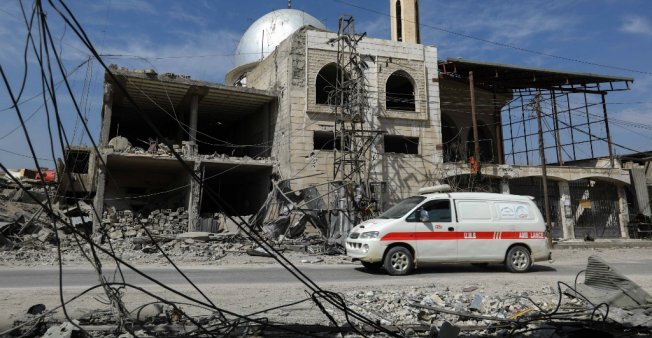
Abdullah Hammam, AFP | An ambulance in Eastern Ghouta, Syria on March 7, 2018.
|
Through
January and February the United Nations health
agency's monitoring mechanism verified 67 attacks that hit medical targets, WHO spokesman Christian
Lindmeier told reporters in Geneva.
He added
that 112 such attacks were recorded in all of 2017.
Nearly
half of the strikes on medical facilities this year were recorded in Eastern
Ghouta, where the government is waging a devastating offensive to
retake an area it lost in 2013. Its bombing campaign in the area has killed 948
civilians, including 195 children, according to the Syrian Observatory of
Human Rights.
The
facilities hit include 20 hospitals, 16 health facilities, two ambulance
stations and one medical supply warehouse.
The
attacks have “a devastating impact”, said Lindmeier. “We estimate that, in
February, these attacks prevented nearly 1,500 surgical operations and 15,000
medical consultations, many of which could have saved lives.”
Meanwhile,
the NGO Medicins Sans Frontieres is rethinking its plans to send medical
equipment into Eastern Ghouta, because it would be too dangerous, according to
UN humanitarian co-ordinator Ali al-Zataari.
"The
situation has got worse every day"
Lindmeier
said the WHO was not in a position to assign blame for any specific strike but
warned that targeting medical facilities was illegal.
"Medical
facilities and medical personal have special protection under international humanitarian
law," he said.
"WHO
calls all parties in Syria to immediately halt attacks on medical and
humanitarian personal, their means of transport and equipments as well as
hospitals and medical facilities."
These
attacks add to an already difficult situation for doctors in Eastern Ghouta.
“For
about two years, we didn’t have any new tools or medications, because there was
no way to enter Ghouta from the areas around us,” Mohammed al-Mahroum, a doctor
in the besieged enclave, told FRANCE 24. “Day by day, we lose a lot of
medication that we’d stored before – and the situation has got worse every
day.”
“The
people injured by the shelling or the chlorine [gas] attack, we try to treat
here with the medication we have here. Not all of the patients can survive,”
al-Mahroum said.
On
Friday, an aid convoy managed to cross into the embattled rebel-held suburb,
delivering desperately needed aid despite heavy fighting," said the
International Committee of the Red Cross.

