
15 YEARS AFTER INVASION, AFGHANISTAN IS A MESS NOBODY TALKS ABOUT
October 11, 2016
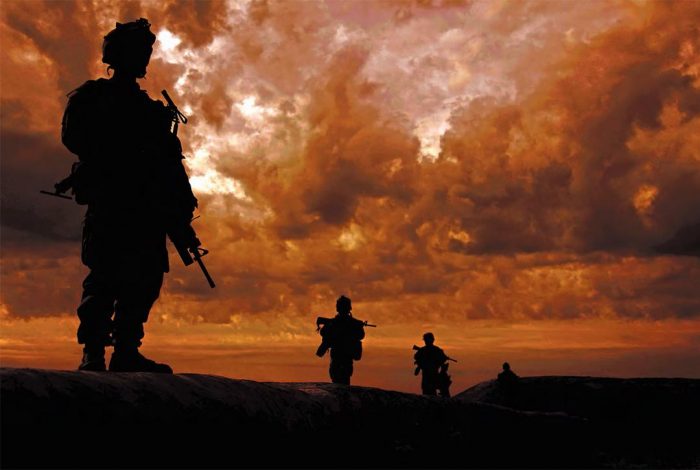
This presidential campaign has endured debates on a number of mundane issues, including the size of a candidate’s hands, who is more dishonest, and which candidate has the better temperament. One thing nobody is talking about is the staggering outcome of the war in Afghanistan — and that’s probably just the way those profiting from this trillion-dollar fiasco like it.
This month marks the 15th anniversary of the US-led intervention in Afghanistan, making it the nation’s longest war. It now appears, based on evidence gathered by a federal inspector general, that the whole undertaking was, and remains, an incredibly expensive disaster that has actually made Afghanistan more corrupt than it was before the US invasion back in 2001.
In one of his most stunning disclosures yet, the Special Inspector General for Afghanistan Reconstruction (SIGAR) revealed that, while the US Forces-Afghanistan reported that there were 319,000 Afghan soldiers, the actual number may only be 120,000. “Persistent reports” of discrepancies in Afghan troop strength “raise questions” over whether or not US taxpayers are actually paying for “ghost soldiers,” SIGAR John Sopko said in a letter to the Pentagon.
Bill Goodfellow, the executive director of the Center for International Policy, a nonprofit that promotes US foreign policy accountability and transparency, observes that despite reports like this, as well as the huge price tag and human cost, there’s been no discussion of Afghanistan in the presidential race.
“It doesn’t affect most people because the military is being staffed by economic conscription and the children of think tank analysts and journalists are not being drafted,” Goodfellow told WhoWhatWhy in a phone interview.
In his visits to Afghanistan, Goodfellow says, he has seen little evidence of the $115 billion that’s been appropriated by the US to rebuild that country. “When you go to Kabul you ask where is it? It’s in Dubai and in the pockets of US contractors,” he charged. “We’ve spent $800 billion on the war in Afghanistan and the 8,400 troops we have there now will cost $20 billion per year.”
Goodfellow sees little chances for a peace deal inside Afghanistan. He believes that as long as the US cash faucet remains open, there is just too much money to be made by all of the key players to do anything but prolong the war. “It provides powerful incentive for the elites,” said Goodfellow. “How do you make peace as lucrative as war?”
Developments in Iraq and Afghanistan show that, despite the loss of thousands of American lives, hundreds of thousands of civilian deaths, and the expenditure of trillions of dollars, neither nation had the capability to defend itself once the US left.
This month is also the one-year anniversary of President Barack Obama’s decision to reverse course, ending his planned withdrawal of American troops. This decision may force his successor to continue US involvement in Afghanistan long after Obama leaves the White House.
The White House’s latest about-face came after the Taliban seized the northern city of Kunduz and held it for two weeks, and after the United Nations reported that the Taliban were as prevalent throughout the country as they had been at any time since 2001.
It was only two years ago that President Obama declared that the combat mission in Afghanistan was ending and that the country’s longest war was “coming to a responsible conclusion.”
There was a similar proclamation after the high-profile American withdrawal from Iraq in 2011.
Washington’s renewed troop commitment in Afghanistan comes at the same time the US is, once again, ramping up its presence in Iraq, helping that country take back territory lost to ISIS.
According to the office of the United Nations Secretary General, the first six months of 2016 saw a 4% increase in civilian casualties in Afghanistan compared to the same period in 2015.
As the violence has escalated, the Afghan Investment Support Agency reports a 30% decline in net investments being made in the beleaguered nation from last year. The Asian Development Bank blames “deteriorating security and law and order concerns” for the retrenchment.

