
Politicians Campaign on Free Speech While Voting to Penalize Boycotts of Israel
Lee Fang and Zaid Jilani, The Intercept, 14 march 2018
Politicians around
the country are seizing upon highly publicized episodes of conservatives faced
with harassment and heckling on college campuses by responding with a wave of
legislation supposedly aimed at preserving free speech rights for campus
speakers. But that commitment, while draped in the mantle of a principled
defense of the First Amendment, does not always extend to speakers who
criticize Israel and its policies.
the country are seizing upon highly publicized episodes of conservatives faced
with harassment and heckling on college campuses by responding with a wave of
legislation supposedly aimed at preserving free speech rights for campus
speakers. But that commitment, while draped in the mantle of a principled
defense of the First Amendment, does not always extend to speakers who
criticize Israel and its policies.
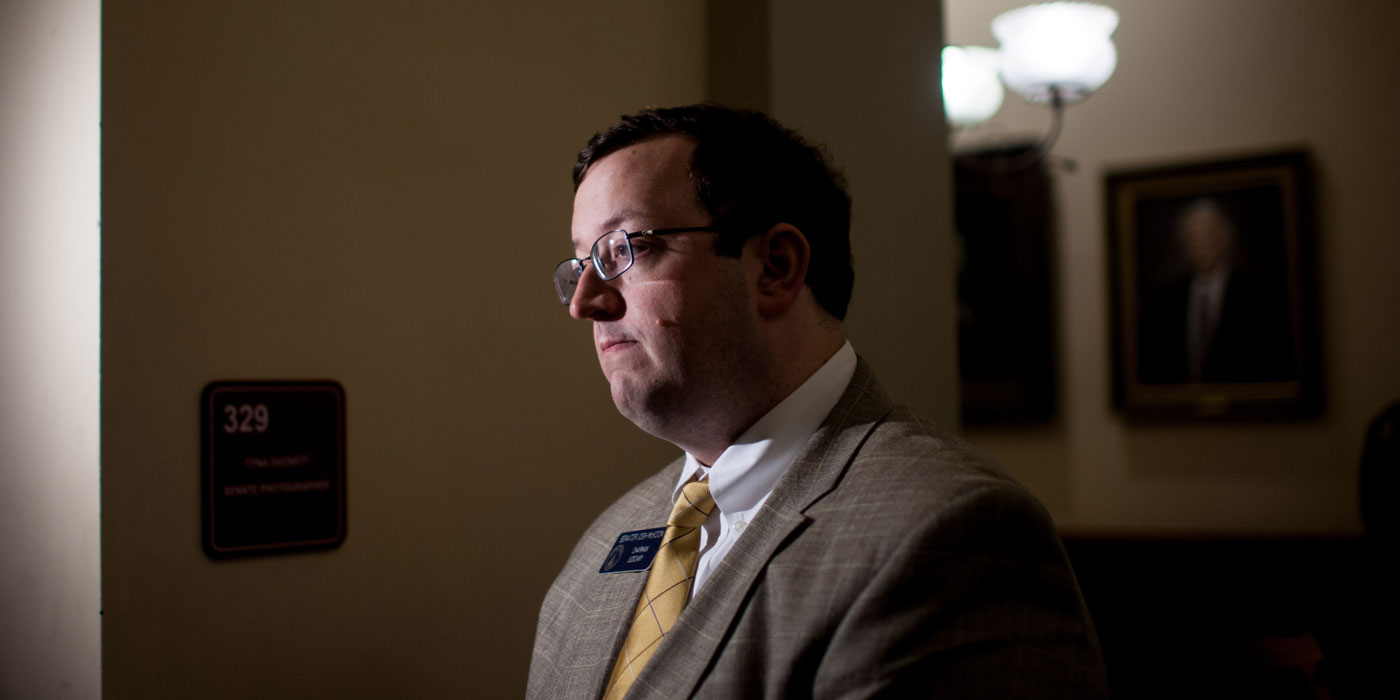 |
| Georgia Sen. Josh McKoon, who is sponsoring the “religious freedom” bill, speaks to the media at the State Capitol on the final day of the 2015 legislative session, Thursday, April 2, 2015, in Atlanta. |
This
renewed concern about free speech comes after a number of high-profile
incidents in which students interrupted conservative speakers, and in a
few cases, even used violence at protests. At a hearing
on campus free speech in October, U.S. senators expressed bipartisan support
for the First Amendment on college campuses, but lawmakers around the
country are demanding free speech with one hand, and passing laws that
punish boycotts of Israel with the other.
renewed concern about free speech comes after a number of high-profile
incidents in which students interrupted conservative speakers, and in a
few cases, even used violence at protests. At a hearing
on campus free speech in October, U.S. senators expressed bipartisan support
for the First Amendment on college campuses, but lawmakers around the
country are demanding free speech with one hand, and passing laws that
punish boycotts of Israel with the other.
One of
the most prominent examples comes from Wisconsin, where Republican
state Sen. Leah Vukmir has used the issue of campus free speech to launch a
campaign for U.S. Senate this year, challenging the incumbent, Democratic Sen.
Tammy Baldwin.
the most prominent examples comes from Wisconsin, where Republican
state Sen. Leah Vukmir has used the issue of campus free speech to launch a
campaign for U.S. Senate this year, challenging the incumbent, Democratic Sen.
Tammy Baldwin.
Vukmir is
the original sponsor of “free speech”
legislation that calls for a strict disciplinary system for those who
infringe on others’ free speech rights on college campuses in her
state. “Students, professors, and administrators are using intimidation
tactics to silence those they disagree with,” Vukmir said, after unveiling her
legislation last May.
the original sponsor of “free speech”
legislation that calls for a strict disciplinary system for those who
infringe on others’ free speech rights on college campuses in her
state. “Students, professors, and administrators are using intimidation
tactics to silence those they disagree with,” Vukmir said, after unveiling her
legislation last May.
She went
on to launch a
campaign with the help of the American Legislative Exchange
Council, or ALEC, for lawmakers in other states to duplicate her campus free
speech efforts. “Senator Vukmir is a champion of free speech issues,”
reads a press release from ALEC, which awarded Vukmir its “Iron Lady
Award” for taking tough stands as a legislator.
on to launch a
campaign with the help of the American Legislative Exchange
Council, or ALEC, for lawmakers in other states to duplicate her campus free
speech efforts. “Senator Vukmir is a champion of free speech issues,”
reads a press release from ALEC, which awarded Vukmir its “Iron Lady
Award” for taking tough stands as a legislator.
But
Vukmir, a strong supporter
of Israel, is apparently selective in her championing of free speech.
Vukmir, a strong supporter
of Israel, is apparently selective in her championing of free speech.
Just
months after sponsoring the free speech legislation last year,
Vukmir sponsored a
so-called anti-BDS law in Wisconsin, prohibiting the state from entering into
contracts with businesses that choose to express themselves by
engaging in a boycott to protest Israeli occupation of the West
Bank. Gov. Scott Walker signed
an executive order establishing the anti-BDS policy in October.
months after sponsoring the free speech legislation last year,
Vukmir sponsored a
so-called anti-BDS law in Wisconsin, prohibiting the state from entering into
contracts with businesses that choose to express themselves by
engaging in a boycott to protest Israeli occupation of the West
Bank. Gov. Scott Walker signed
an executive order establishing the anti-BDS policy in October.
BDS
refers to the Palestinian-led boycott, divestment, and sanctions movement that
advocates for economic pressure to force Israel to end its occupation of the
Palestinian territories. BDS campaigns have gained traction across the United
States in recent years, particularly on college campuses. Palestine Legal,
a nonprofit advocacy group, notes that boycotts
have long played a significant role in U.S. history, and that the “Supreme
Court has held that boycotts to effect political, social, and economic change
are protected by the First Amendment of the Constitution.”
refers to the Palestinian-led boycott, divestment, and sanctions movement that
advocates for economic pressure to force Israel to end its occupation of the
Palestinian territories. BDS campaigns have gained traction across the United
States in recent years, particularly on college campuses. Palestine Legal,
a nonprofit advocacy group, notes that boycotts
have long played a significant role in U.S. history, and that the “Supreme
Court has held that boycotts to effect political, social, and economic change
are protected by the First Amendment of the Constitution.”
But
pro-Israel advocacy organizations, including
the America Israel Public Affairs Committee, known by its acronym AIPAC,
have spearheaded an aggressive campaign to encourage lawmakers to stifle BDS
activism. Twenty-four states have now passed legislation
designed to penalize or prohibit BDS activity.
pro-Israel advocacy organizations, including
the America Israel Public Affairs Committee, known by its acronym AIPAC,
have spearheaded an aggressive campaign to encourage lawmakers to stifle BDS
activism. Twenty-four states have now passed legislation
designed to penalize or prohibit BDS activity.
AIPAC
spearheaded an aggressive campaign to encourage lawmakers to stifle BDS
activism.
These
laws have been used to suppress the speech of a wide range of people and
businesses. In Kansas, a star teacher
was denied payment to train other teachers because she was following
her church’s guidance and boycotting Israel. (A federal court struck down
the Kansas law following that controversy.) In Texas, a town seeking
contractors to rebuild after a devastating hurricane mistakenly used an
anti-BDS clause to prevent the hiring of anyone who also boycotted
Israel.
laws have been used to suppress the speech of a wide range of people and
businesses. In Kansas, a star teacher
was denied payment to train other teachers because she was following
her church’s guidance and boycotting Israel. (A federal court struck down
the Kansas law following that controversy.) In Texas, a town seeking
contractors to rebuild after a devastating hurricane mistakenly used an
anti-BDS clause to prevent the hiring of anyone who also boycotted
Israel.
Rather
than focus on the suppression of pro-Palestinian activism, legislators have
almost singularly focused on a string of high-profile attacks on right-wing
speakers on college campuses. One example
is Milo Yiannopoulos, an “alt-right” provocateur who has collaborated
with white supremacist figures. He was a relatively obscure figure until
left-wing activists protested
violently when he came to the University of California,
Berkeley campus, elevating him as a national figure. At the October
Senate hearing, Allison Stanger, a Middlebury College professor, testified
about her experience moderating a talk with American Enterprise Institute
scholar Charles Murray, whose book, “The Bell Curve,” on IQ as a determinant of
socioeconomic status has been criticized as being
racist. The protesters disrupted the speaking engagement, assaulting
Stanger and leaving her hospitalized.
than focus on the suppression of pro-Palestinian activism, legislators have
almost singularly focused on a string of high-profile attacks on right-wing
speakers on college campuses. One example
is Milo Yiannopoulos, an “alt-right” provocateur who has collaborated
with white supremacist figures. He was a relatively obscure figure until
left-wing activists protested
violently when he came to the University of California,
Berkeley campus, elevating him as a national figure. At the October
Senate hearing, Allison Stanger, a Middlebury College professor, testified
about her experience moderating a talk with American Enterprise Institute
scholar Charles Murray, whose book, “The Bell Curve,” on IQ as a determinant of
socioeconomic status has been criticized as being
racist. The protesters disrupted the speaking engagement, assaulting
Stanger and leaving her hospitalized.
ACROSS THE COUNTRY, politicians are hoping to harness the outrage over such
incidents into political benefit, supposedly in the name of securing free
speech.
incidents into political benefit, supposedly in the name of securing free
speech.
Texas
Republican state Sen. Van Taylor last week won the GOP nomination to
run for Texas’s 3rd Congressional District, which encompasses parts
of Dallas. Last year, Taylor voted in favor of SB1151,
a bill designed to discourage campus censorship. The vote occurred within weeks
of another Taylor-supported bill, HB89,
which prevents the state of Texas from entering into contracts with businesses
engaged in BDS activism.
Republican state Sen. Van Taylor last week won the GOP nomination to
run for Texas’s 3rd Congressional District, which encompasses parts
of Dallas. Last year, Taylor voted in favor of SB1151,
a bill designed to discourage campus censorship. The vote occurred within weeks
of another Taylor-supported bill, HB89,
which prevents the state of Texas from entering into contracts with businesses
engaged in BDS activism.
Ohio
Republican state Rep. Robert Sprague, running for state treasurer, is the
sponsor of bills to both promote
campus free speech and to penalize
companies that express support for BDS.
Republican state Rep. Robert Sprague, running for state treasurer, is the
sponsor of bills to both promote
campus free speech and to penalize
companies that express support for BDS.
In
Georgia, Republican state senator Josh McKoon is one of a number of Republicans
vying
for the office of secretary of state. He was one of the co-sponsors of Senate Bill
339, which, like the Wisconsin bill, takes aim at students who
interrupt university speakers. McKoon is also the man behind the failed
perennial push for a religious freedom bill, known as RFRA, that
critics fear would essentially license businesses to discriminate.
Georgia, Republican state senator Josh McKoon is one of a number of Republicans
vying
for the office of secretary of state. He was one of the co-sponsors of Senate Bill
339, which, like the Wisconsin bill, takes aim at students who
interrupt university speakers. McKoon is also the man behind the failed
perennial push for a religious freedom bill, known as RFRA, that
critics fear would essentially license businesses to discriminate.
In a 2016
interview, McKoon justified the religious freedom bill by citing the
example of a wedding singer who would be asked by a same-sex couple to perform at
their ceremony. “If that person is approached by a same-sex couple that says,
‘We want to hire you to do this,’”and [the singer] says, ‘No, I believe that
wedding is a sacramental union that involves God, one man, and one woman, and
this is contrary to my belief,’ are we going to say, as a matter of policy, the
government is going to compel that person to participate in the order of
service against their sincerely held religious beliefs? I don’t think that
anybody would suggest that we shouldn’t make room for people who have different
beliefs or different ideas,” he said.
interview, McKoon justified the religious freedom bill by citing the
example of a wedding singer who would be asked by a same-sex couple to perform at
their ceremony. “If that person is approached by a same-sex couple that says,
‘We want to hire you to do this,’”and [the singer] says, ‘No, I believe that
wedding is a sacramental union that involves God, one man, and one woman, and
this is contrary to my belief,’ are we going to say, as a matter of policy, the
government is going to compel that person to participate in the order of
service against their sincerely held religious beliefs? I don’t think that
anybody would suggest that we shouldn’t make room for people who have different
beliefs or different ideas,” he said.
But
McKoon also was a sponsor of SB
327, which, when it passed in 2016, outlawed state contracts with
any individual or business who boycotts businesses based in Israel or even in
the illegal settlements Israel operates in Palestinian territory. The bill does
exactly what McKoon claims to be against: It tries to compel people to take
actions against their own beliefs.
McKoon also was a sponsor of SB
327, which, when it passed in 2016, outlawed state contracts with
any individual or business who boycotts businesses based in Israel or even in
the illegal settlements Israel operates in Palestinian territory. The bill does
exactly what McKoon claims to be against: It tries to compel people to take
actions against their own beliefs.
The bill
does exactly what McKoon claims to be against: It tries to compel people to
take actions against their own beliefs.
For
example, the Kansas teacher who was barred
from a state contract because of her support for BDS was inspired to
engage in boycotts because of her membership in the Mennonite Church USA.
Last year, the church voted
to divest from some U.S. companies that do business in Israel’s
occupied territories.
example, the Kansas teacher who was barred
from a state contract because of her support for BDS was inspired to
engage in boycotts because of her membership in the Mennonite Church USA.
Last year, the church voted
to divest from some U.S. companies that do business in Israel’s
occupied territories.
In an
email to The Intercept, McKoon said he saw no contradiction between supporting
RFRA and potentially punishing individuals who would boycott Israel under a
religion obligation.
email to The Intercept, McKoon said he saw no contradiction between supporting
RFRA and potentially punishing individuals who would boycott Israel under a
religion obligation.
“With
respect to your question, if RFRA were to pass, the state law regarding
contracts with Israel and a business which does business with Georgia claimed
their boycott of Israel had a religious basis, then the balancing test would be
applied,” he wrote, going on to explain the legal balancing test a court would
have to do if the law were to be challenged. “First the Court would have to
determine if the interest in preserving our relationship with Israel was a
compelling state interest. Then if the Court was satisfied that it was a
compelling state interest they would have to determine if some sort of
religious accommodation would be warranted to make the policy the least
restrictive policy. I don’t pretend to know how the Court would resolve a
hypothetical lawsuit after RFRA passed, which is the point of the whole RFRA
debate. It isn’t a religious exemption bill as some have tried to claim,
but rather a balancing test under which sometimes the government prevails and
sometimes the individual prevails.”
respect to your question, if RFRA were to pass, the state law regarding
contracts with Israel and a business which does business with Georgia claimed
their boycott of Israel had a religious basis, then the balancing test would be
applied,” he wrote, going on to explain the legal balancing test a court would
have to do if the law were to be challenged. “First the Court would have to
determine if the interest in preserving our relationship with Israel was a
compelling state interest. Then if the Court was satisfied that it was a
compelling state interest they would have to determine if some sort of
religious accommodation would be warranted to make the policy the least
restrictive policy. I don’t pretend to know how the Court would resolve a
hypothetical lawsuit after RFRA passed, which is the point of the whole RFRA
debate. It isn’t a religious exemption bill as some have tried to claim,
but rather a balancing test under which sometimes the government prevails and
sometimes the individual prevails.”
He added:
“I don’t see a conflict between desiring a strict scrutiny standard for free
exercise claims against state and local government and public policy to
preserve our historic relationship with the State of Israel.”
“I don’t see a conflict between desiring a strict scrutiny standard for free
exercise claims against state and local government and public policy to
preserve our historic relationship with the State of Israel.”
In other
words, McKoon argued that the state may have an interest in maintaining a
relationship with Israel that supersedes an individual’s religious freedom and
free speech rights, or it may not, but he wants the courts to settle the
debate.
words, McKoon argued that the state may have an interest in maintaining a
relationship with Israel that supersedes an individual’s religious freedom and
free speech rights, or it may not, but he wants the courts to settle the
debate.
In Iowa,
the state legislature in 2016 voted
to bar state funds from being invested in companies boycotting Israel. On
February 28 of this year, the state Senate passed
its own campus free speech bill, with all Republicans in favor, and all
Democrats plus the chamber’s one independent opposed. All of the Republicans
who were serving in 2016 and are still serving backed both the anti-BDS and
campus free speech bill.
the state legislature in 2016 voted
to bar state funds from being invested in companies boycotting Israel. On
February 28 of this year, the state Senate passed
its own campus free speech bill, with all Republicans in favor, and all
Democrats plus the chamber’s one independent opposed. All of the Republicans
who were serving in 2016 and are still serving backed both the anti-BDS and
campus free speech bill.
The
hypocrisy, while more pronounced by Republicans on the state level, is shared
by both parties.
hypocrisy, while more pronounced by Republicans on the state level, is shared
by both parties.
In
Congress, a bipartisan group of lawmakers have sponsored a series of resolutions
and hearings
to highlight the threat to free speech on college campuses, while many of the
same members have sponsored efforts go even further than state-level anti-BDS laws,
pushing to impose
criminal and civil penalties on organizations that engage in BDS activism.
Congress, a bipartisan group of lawmakers have sponsored a series of resolutions
and hearings
to highlight the threat to free speech on college campuses, while many of the
same members have sponsored efforts go even further than state-level anti-BDS laws,
pushing to impose
criminal and civil penalties on organizations that engage in BDS activism.
The
Senate legislation criminalizing boycott speech against Israel is championed by
Sen. Ben Cardin, D-Md. In the House, the lead co-sponsor
is Rep. Todd Rokita, R-Ind., who simultaneously sponsors
the bill championing free expression on college campuses.
Senate legislation criminalizing boycott speech against Israel is championed by
Sen. Ben Cardin, D-Md. In the House, the lead co-sponsor
is Rep. Todd Rokita, R-Ind., who simultaneously sponsors
the bill championing free expression on college campuses.
The
anti-BDS laws have the potential to result in censorship of student
speakers, the very issue that has supposedly inspired the wave of campus free
speech laws.
anti-BDS laws have the potential to result in censorship of student
speakers, the very issue that has supposedly inspired the wave of campus free
speech laws.
As a
result of Arizona’s HB2617, an anti-BDS state law passed in 2016, students at
Arizona State University had to change their plans for an upcoming event
on Palestine. They invited Hatem Bazian, chair of American Muslims
for Palestine, to speak about BDS at the April 3 event, but the university’s
speaker agreement included a “No Boycott of Israel” clause, based on the
state’s anti-BDS law. Bazian could not comply with that provision and thus, was
effectively barred from speaking at the university, according to a lawsuit
filed on March 1 by the CAIR Legal Defense Fund.
result of Arizona’s HB2617, an anti-BDS state law passed in 2016, students at
Arizona State University had to change their plans for an upcoming event
on Palestine. They invited Hatem Bazian, chair of American Muslims
for Palestine, to speak about BDS at the April 3 event, but the university’s
speaker agreement included a “No Boycott of Israel” clause, based on the
state’s anti-BDS law. Bazian could not comply with that provision and thus, was
effectively barred from speaking at the university, according to a lawsuit
filed on March 1 by the CAIR Legal Defense Fund.
Bret
Hovell, a spokesperson for the university, told The Intercept that the school
does not believe the anti-BDS law should apply in this case, and that
student groups are free to use a contract that does not include the clause. “It
was a simple mistake that the ASU form containing the certification [of not
boycotting Israel] was used,” he said. The Arizona Attorney General’s Office
did not respond to a request for comment on its view of whether the
law applies.
Hovell, a spokesperson for the university, told The Intercept that the school
does not believe the anti-BDS law should apply in this case, and that
student groups are free to use a contract that does not include the clause. “It
was a simple mistake that the ASU form containing the certification [of not
boycotting Israel] was used,” he said. The Arizona Attorney General’s Office
did not respond to a request for comment on its view of whether the
law applies.
Not every
politician who champions free speech is a hypocrite. Massachusetts
Democratic Sen. Elizabeth Warren attended the October Senate hearing on
campus free speech and condemned
both censorship and violence as a response to controversial speakers. But she also told a
town hall last year that she opposes anti-BDS
legislation, arguing that it infringes on free speech.
politician who champions free speech is a hypocrite. Massachusetts
Democratic Sen. Elizabeth Warren attended the October Senate hearing on
campus free speech and condemned
both censorship and violence as a response to controversial speakers. But she also told a
town hall last year that she opposes anti-BDS
legislation, arguing that it infringes on free speech.

